Understanding the “Bossy E” rule is a transformative moment in early literacy, and our short and long vowel silent e worksheets are designed to help students master this shift from CVC to CVCe patterns. These educational tools focus on how a silent letter at the end of a word can change a short vowel sound into a long one.
By using these free printables, educators can guide children through the mechanics of reading and spelling with “Magic E,” building the phonological awareness necessary for fluent reading.
Our collection is expertly tailored for Kindergarten and Grade 1 students, aligning with standard American foundational literacy goals. These activities use relatable imagery—such as a cake, kite, and rose—to anchor the transition from sounds like “hop” to “hope.” Whether for homeschooling or classroom literacy centers, these high-resolution PDFs provide a professional and comprehensive solution for early childhood language development.
Short and Long Vowel Silent E Worksheets With Pictures, Answers and PDF For Kindergarten To Grade 1
This interactive set of practice pages offers a multi-layered approach to mastering silent e patterns. From visual matching and spelling drills to engaging bingo games, these worksheets ensure that students remain mentally stimulated as they explore vowel transformations. Below is a detailed breakdown of the distinct educational objectives and visual components found within this premium printable bundle.
Activity Overview
| Activity Type | Focus Area | Educational Objective |
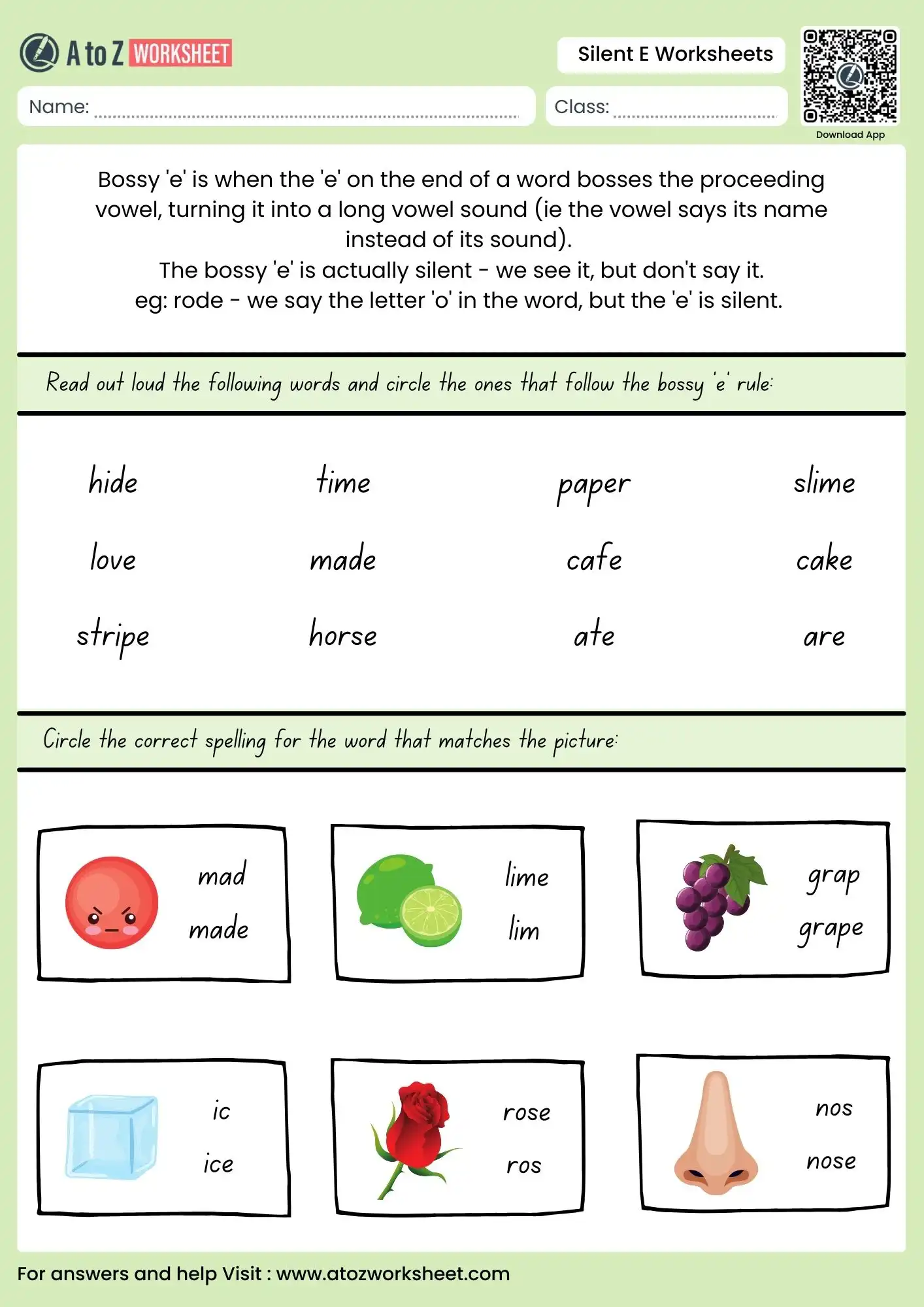
| Silent E Rule Introduction | Phonetic Logic | Learning how the “Bossy E” turns short vowels into long vowel sounds. |
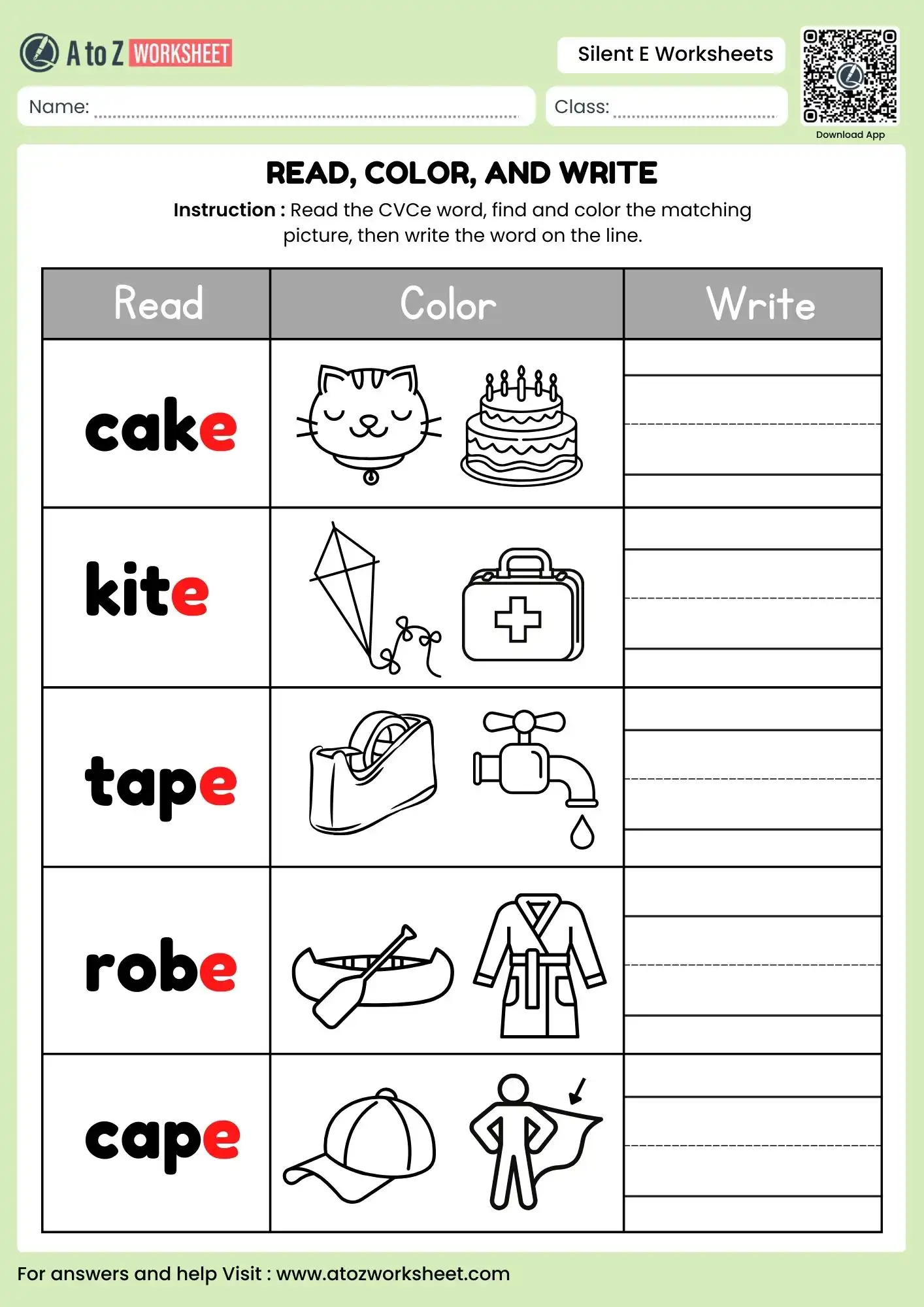
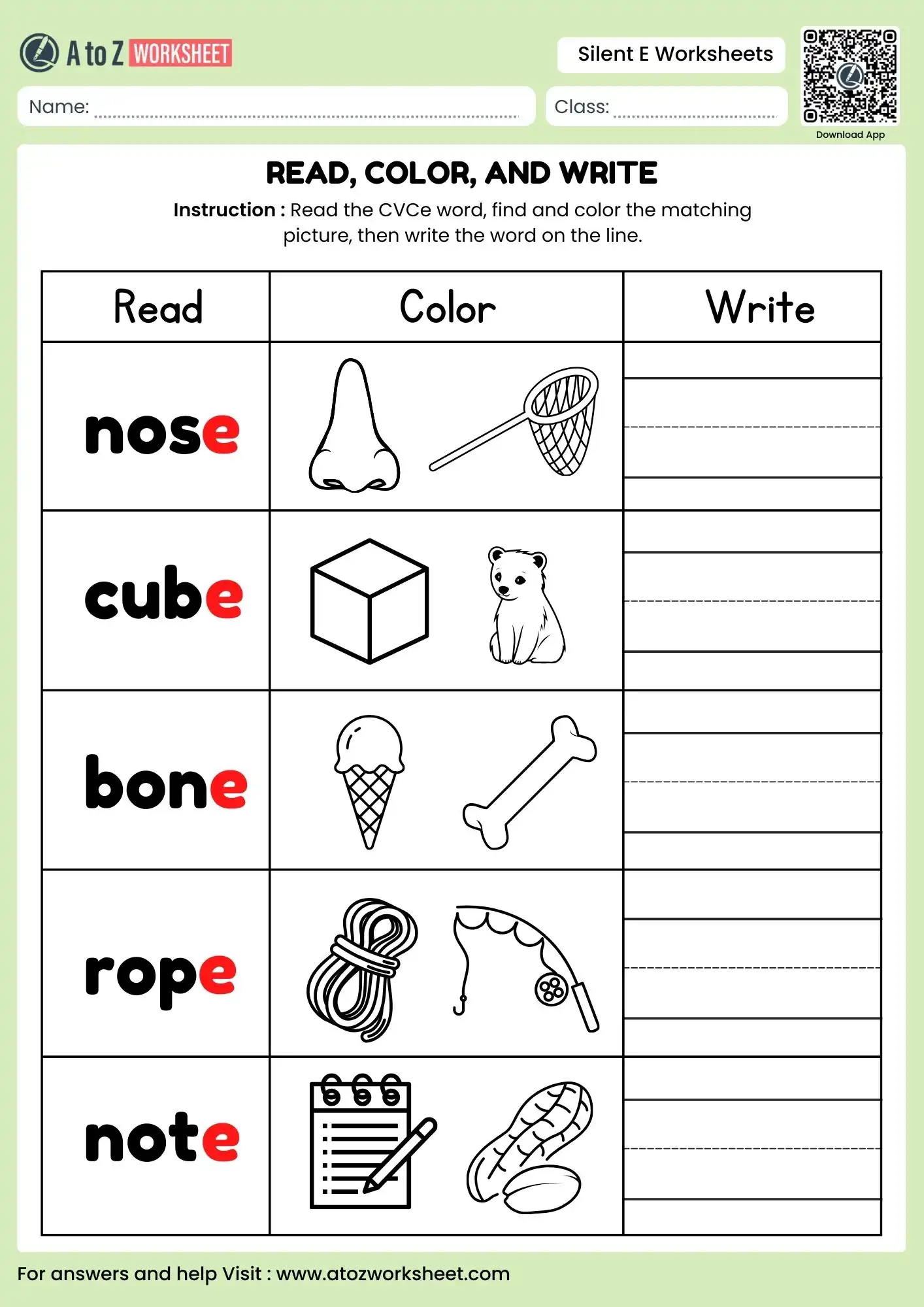
| Read, Color, and Write | CVCe Fluency | Strengthening the link between written words, visual images, and independent penmanship. |
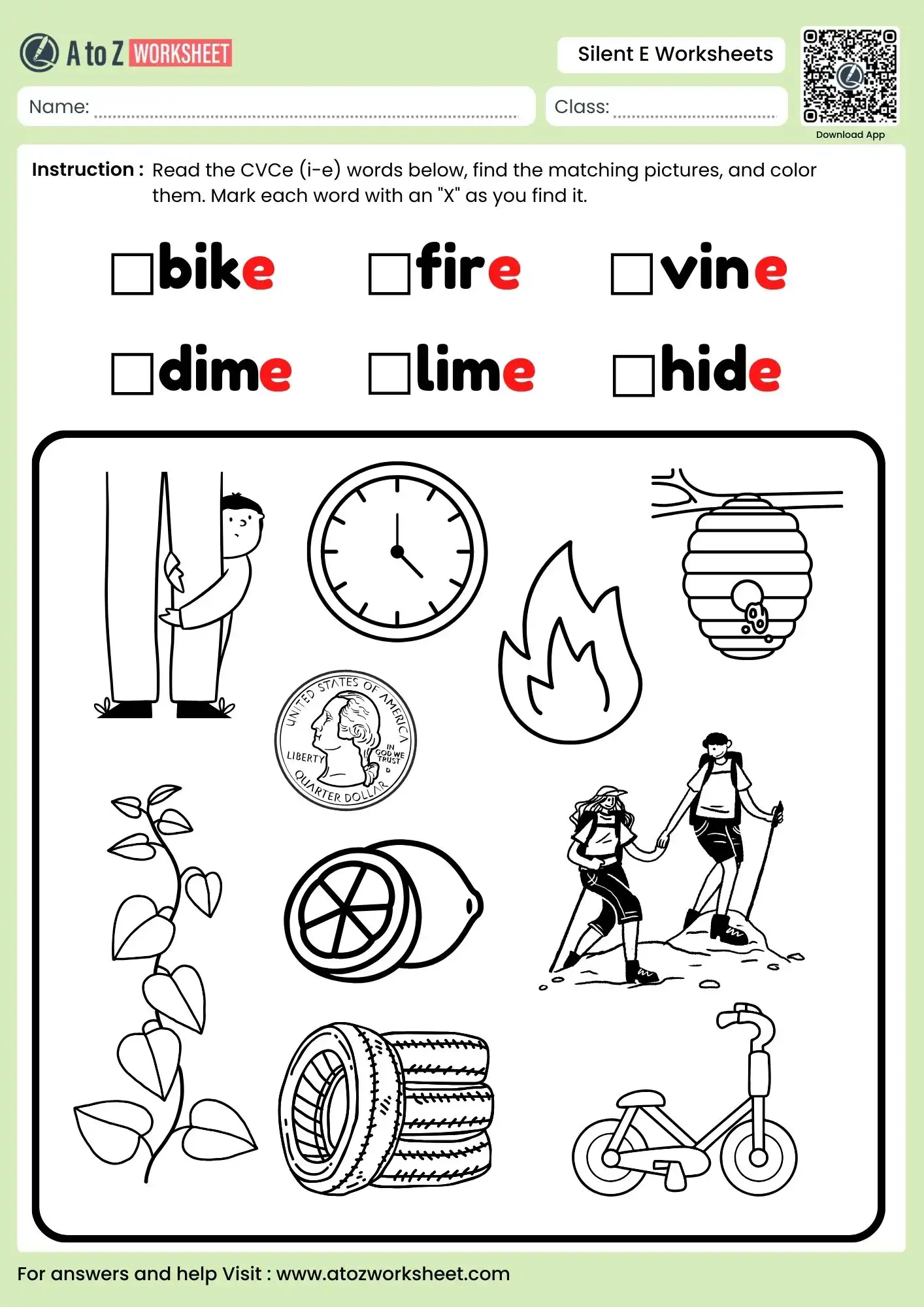
| Visual Search & Find | Word Recognition | Identifying specific CVCe (i-e) words within a busy illustration to sharpen visual discrimination. |
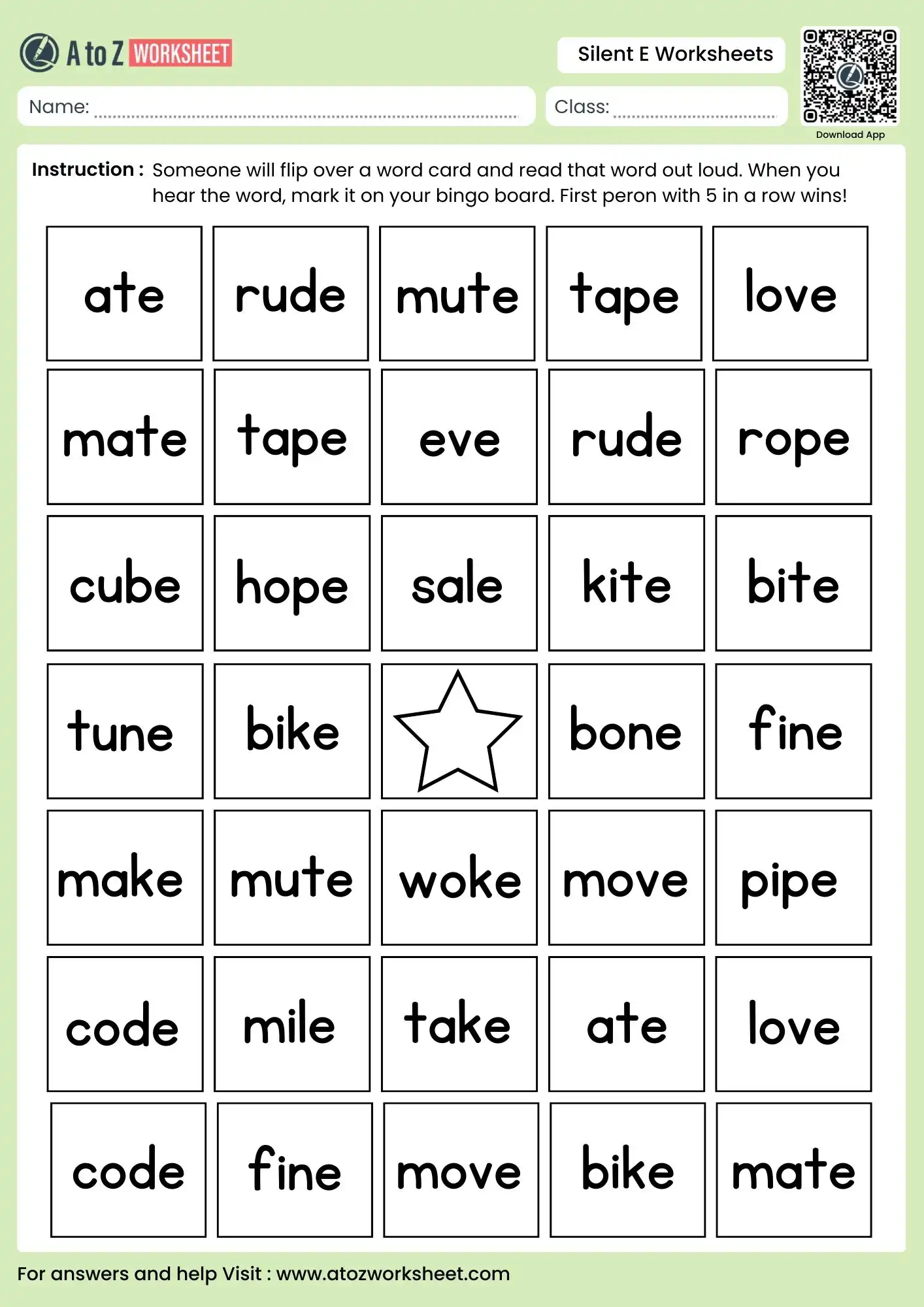
| CVCe Bingo Game | Group Literacy | Building speed and accuracy in recognizing long vowel words through interactive play. |
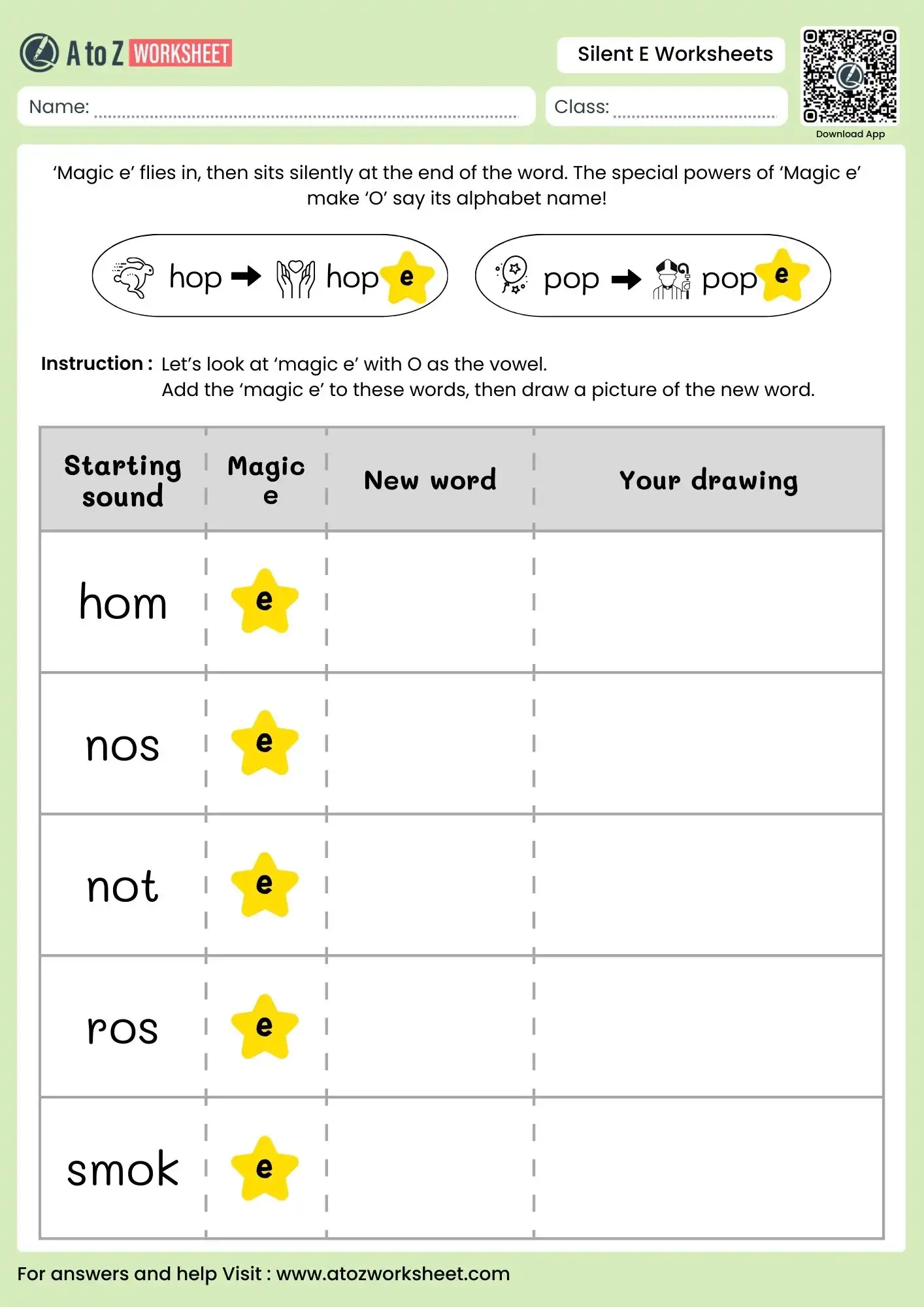
| Magic E Transformation | Word Construction | Adding “e” to starting sounds to create and illustrate new vocabulary like home or note. |
Answers
Below are the organized answers for each worksheet to assist parents and teachers in quickly verifying the student’s work.
Worksheet 1: Spelling Choices
- Pictures: made (angry face), lime (fruit), grape (fruit), ice (cube), rose (flower), nose (nose icon).
Worksheet 2: Read, Color, Write (Set 1)
- cake: Color the cake; Write “cake”
- kite: Color the kite; Write “kite”
- tape: Color the tape dispenser; Write “tape”
- robe: Color the bathrobe; Write “robe”
- cape: Color the hero with the cape; Write “cape”
Worksheet 3: Read, Color, Write (Set 2)
- nose: Color the nose; Write “nose”
- cube: Color the 3D cube; Write “cube”
- bone: Color the bone; Write “bone”
- rope: Color the coiled rope; Write “rope”
- note: Color the notebook; Write “note”
Worksheet 4: i-e Word Search
- bike: Find the bicycle at the bottom right.
- fire: Find the flame in the center.
- vine: Find the leafy vine on the left.
- dime: Find the quarter dollar/coin in the middle.
- lime: Find the cut fruit at the bottom.
- hide: Find the boy hiding behind the legs at the top left.
Worksheet 6: Magic E Construction
- hom + e: New word = home
- nos + e: New word = nose
- not + e: New word = note
- ros + e: New word = rose
- smok + e: New word = smoke
Silent E Worksheets PDF Free Download
You can download the entire six-page collection in one convenient PDF file. This printable resource is optimized for standard 8.5″ x 11″ paper, making it an ideal choice for instant classroom use or home study. Simply click the link below to get your free silent e practice bundle.
Learning Outcome
By consistently utilizing these phonological discovery tools, children will learn to successfully navigate the structural change that a silent “e” brings to a word. They will expand their early vocabulary through visual association with words like cube and robe. Furthermore, the varied nature of these tasks ensures that students develop the cognitive focus and visual concentration required for Grade 1 literacy success.
Related Worksheets May You Like
FAQs
Why is it called “Magic E” or “Bossy E”?
These are fun nicknames used to help children remember the rule: the “e” is silent (magic) but has the power to tell the previous vowel to say its name instead of its sound (bossy).
How do these short and long vowel silent e worksheets help with spelling?
By practicing the transition from CVC to CVCe (like hop to hope), students learn that the presence of the final “e” is a visual signal for how the word should be pronounced and spelled.
Are these printables suitable for students who are just starting to read?
Yes, the worksheets provide a gentle introduction to the rule with plenty of pictorial support, making them perfect for Kindergarteners and early first graders.
Summary
In summary, our short and long vowel silent e worksheets provide a professional and effective pathway for mastering one of the most important rules in English phonics. By blending rigorous writing discipline with engaging visual searches and creative word construction, these free printables create a well-rounded learning environment. Download the complete PDF today to provide your student with top-tier educational materials designed for long-term academic growth.
I hope you like it and to get such worksheets for students on different topics, keep visiting our website atozworksheet.com. For instant updates, follow us on Instagram, Facebook, Pinterest, Telegram and subscribe to our YouTube channel.