EVS worksheets for class 5 help students understand important environmental concepts in a simple, engaging, and activity-based way. These worksheets cover topics like water, food, digestion, pollution, and environmental issues, making learning meaningful for young learners across the world. Whether used by teachers in classrooms or parents at home, these printable exercises encourage clear thinking and build strong science skills.
Each worksheet includes reading passages, diagrams, labelling tasks, classification tables, true/false questions, and real-life environmental situations. Children learn through observation, reasoning, and hands-on tasks, which supports better understanding and long-term memory. These resources are suitable for global learners and designed to match modern educational needs.
EVS Worksheets For Class 5 With Answers and PDF
These worksheets include a mix of comprehension, science concepts, environmental awareness topics, and skill-building exercises. Students learn how natural resources work, how our body functions, and why environmental care is important. Each sheet encourages analytical thinking and helps learners develop confidence while studying environmental studies.
Answers
Parents and teachers can use the answer key below to check student responses and guide them through each concept. These solutions help children understand ideas clearly while learning at their own pace.
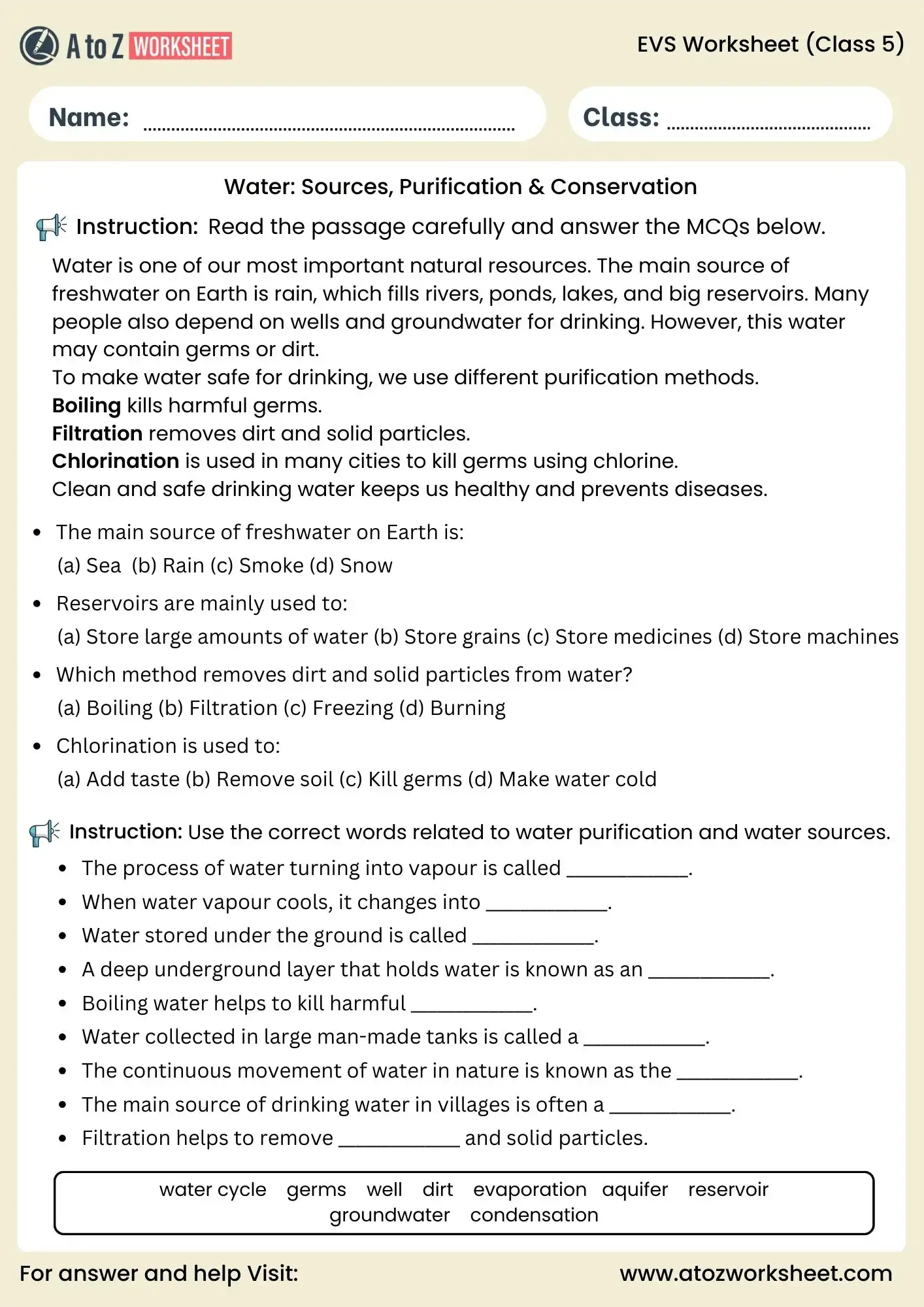
Worksheet 1 Answers (Water: Sources, Purification & Conservation)
- The main source of freshwater on Earth is rain.
- Reservoirs are mainly used to store large amounts of water.
- Filtration removes dirt and solid particles from water.
- Chlorination is used to kill germs.
- The process of water turning into vapour is called evaporation.
- When water vapour cools, it changes into condensation.
- Water stored under the ground is called groundwater.
- A deep underground layer that holds water is known as an aquifer.
- Boiling water helps to kill harmful germs.
- Water collected in large man-made tanks is called a reservoir.
- The continuous movement of water in nature is known as the water cycle.
- The main source of drinking water in villages is often a well.
- Filtration helps to remove dirt and solid particles.
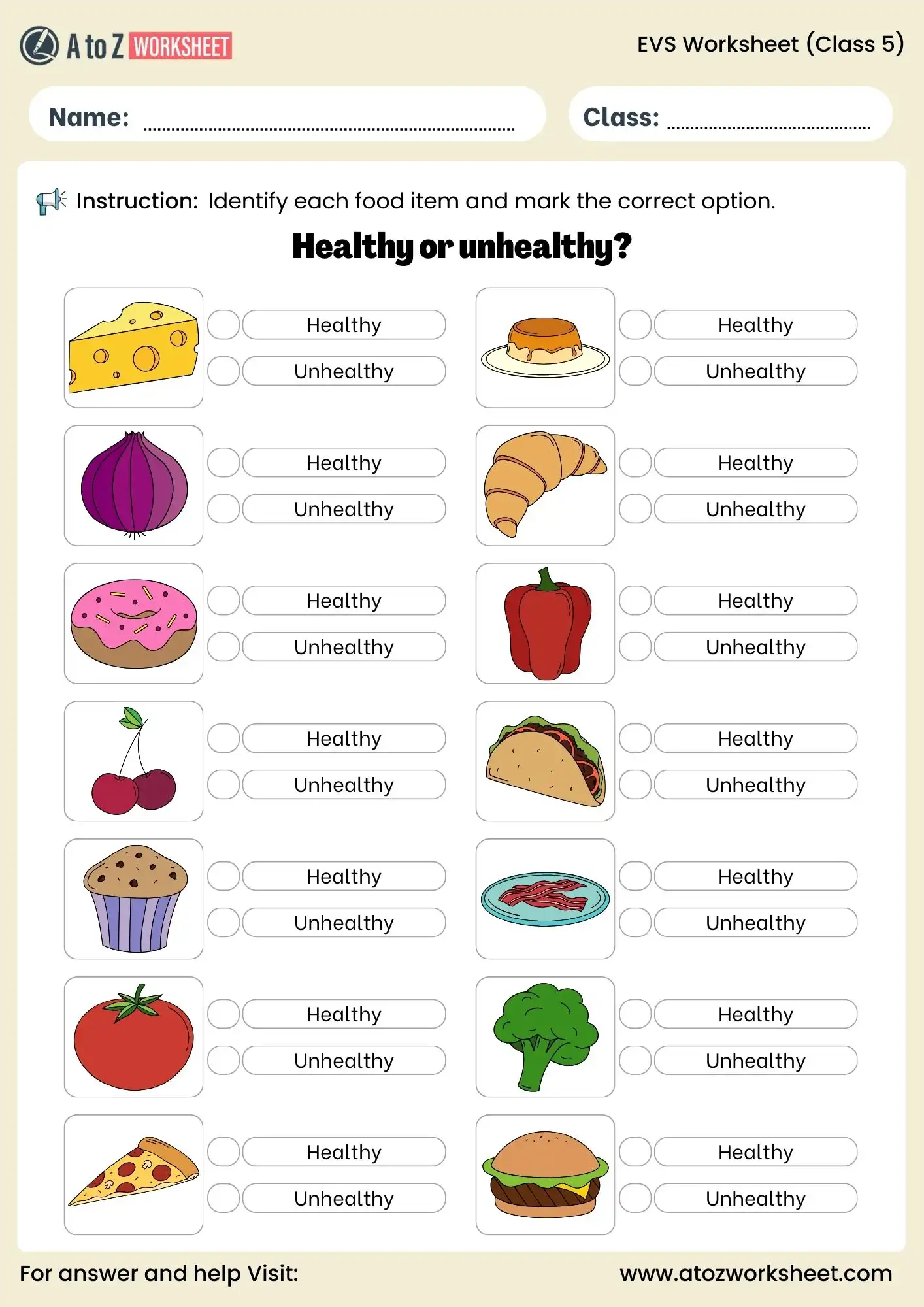
Worksheet 2 Answers (Healthy or Unhealthy Food)
- Cheese – Healthy
- Caramel pudding – Unhealthy
- Onion – Healthy
- Croissant – Unhealthy
- Doughnut – Unhealthy
- Capsicum – Healthy
- Cherry – Healthy
- Taco – Unhealthy
- Muffin – Unhealthy
- Bacon – Unhealthy
- Tomato – Healthy
- Broccoli – Healthy
- Pizza – Unhealthy
- Burger – Unhealthy
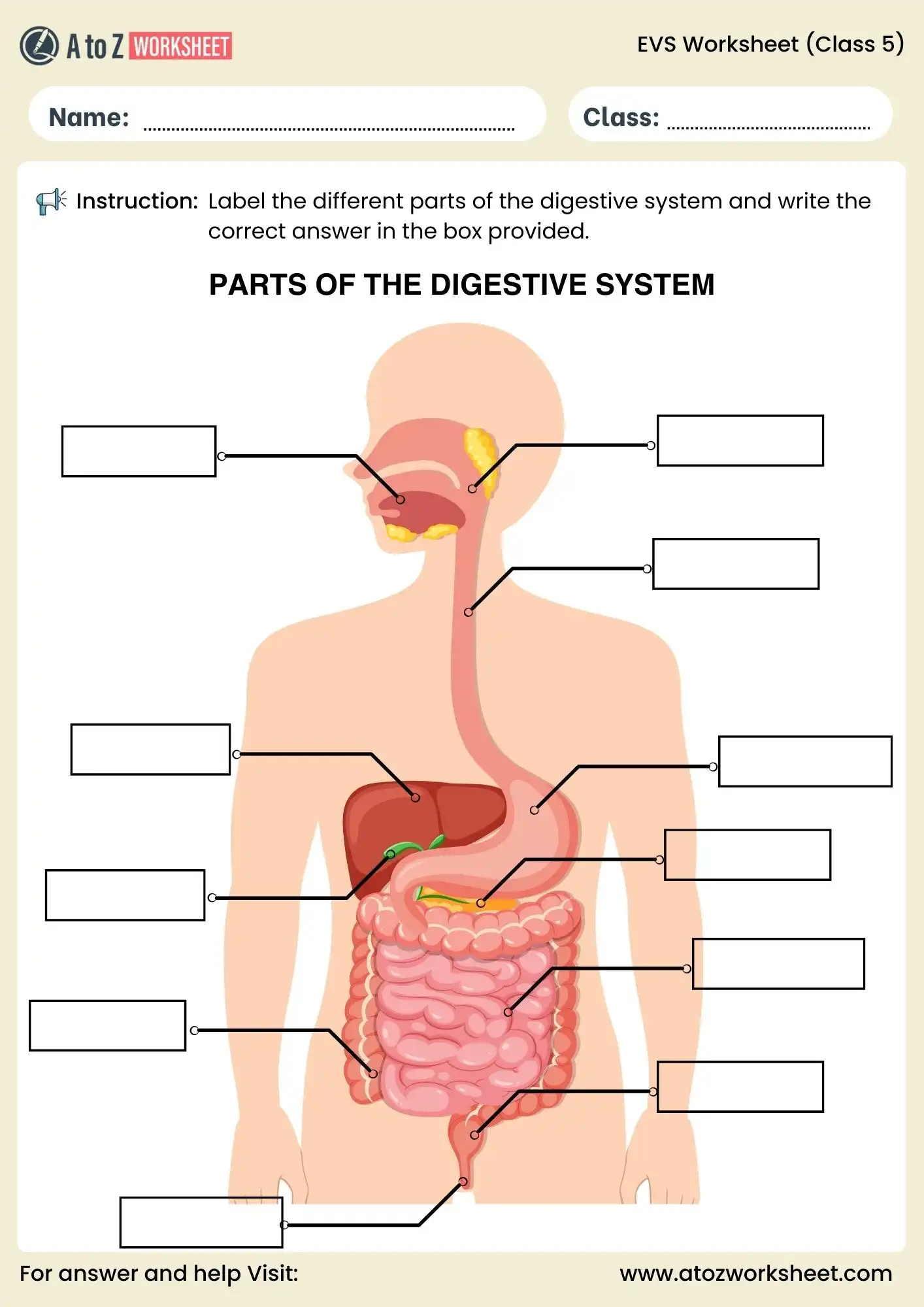
Worksheet 3 Answers (Parts of the Digestive System)
- Mouth
- Salivary glands
- Esophagus
- Stomach
- Liver
- Pancreas
- Small intestine
- Large intestine
- Rectum
- Anus
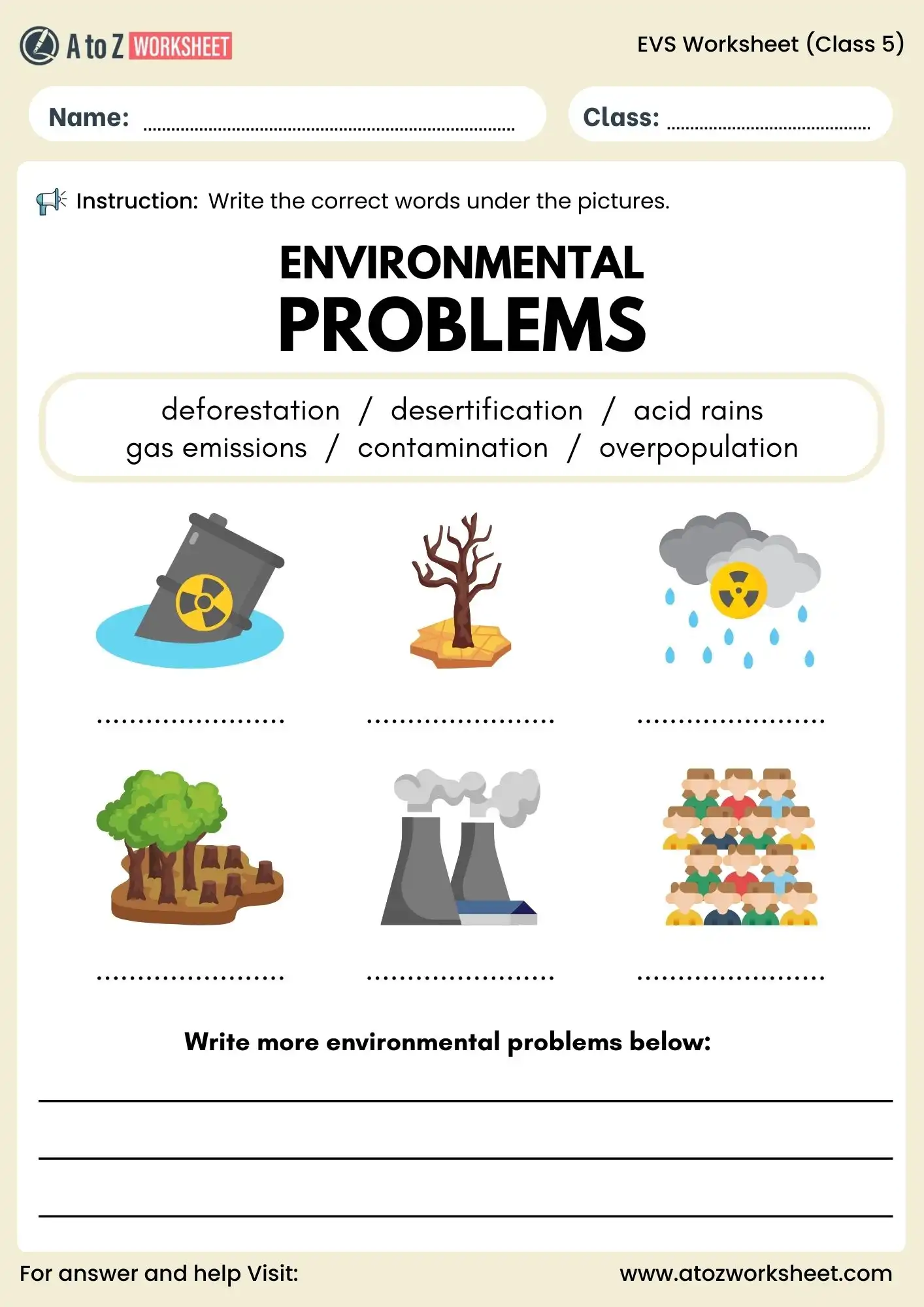
Worksheet 4 Answers (Environmental Problems)
- Contamination
- Desertification
- Acid rains
- Deforestation
- Gas emissions
- Overpopulation
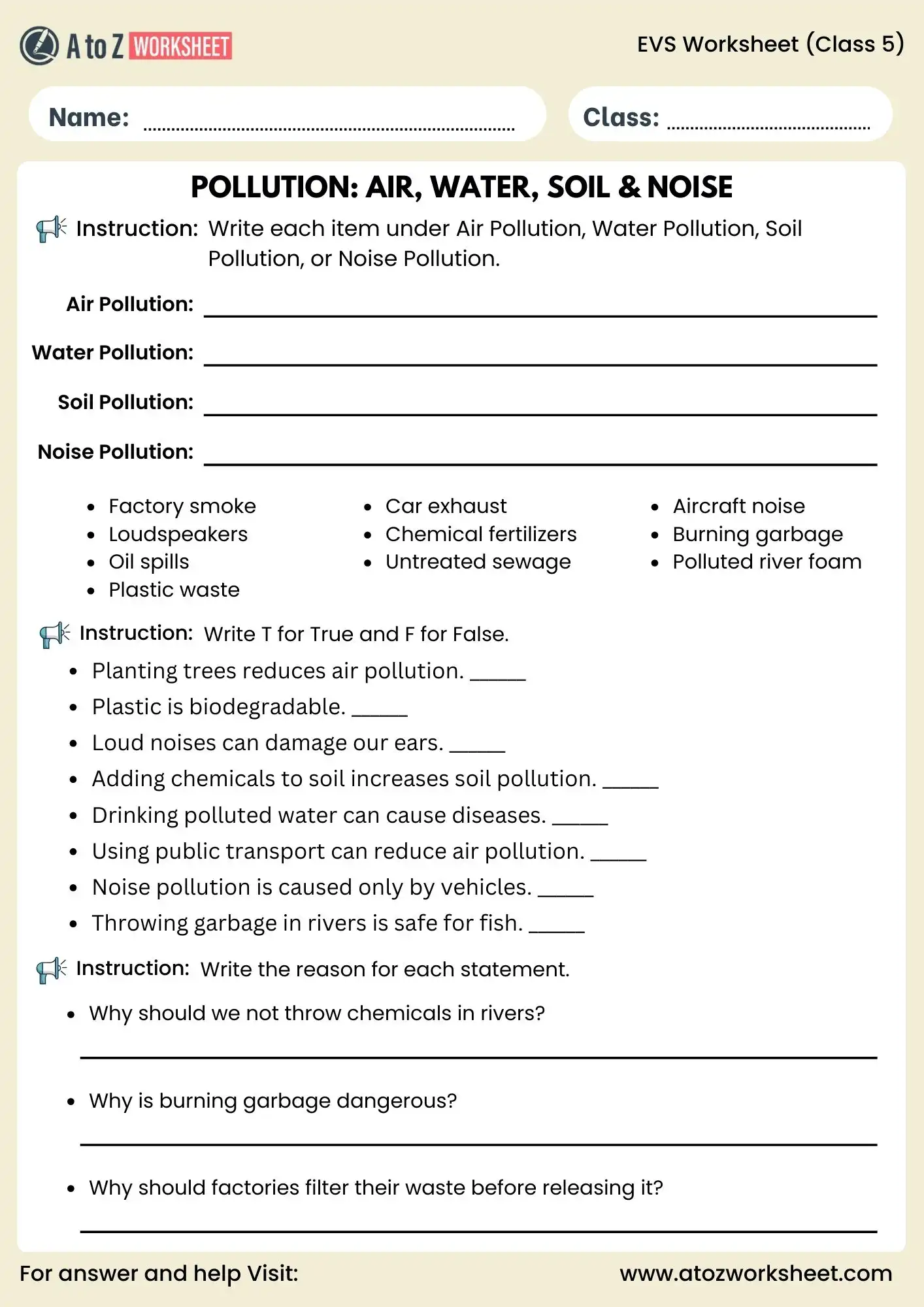
Worksheet 5 Answers (Pollution: Air, Water, Soil & Noise)
- Air Pollution: Factory smoke, car exhaust
- Water Pollution: Oil spills, untreated sewage
- Soil Pollution: Plastic waste, chemical fertilizers
- Noise Pollution: Loudspeakers, aircraft noise
- Planting trees reduces air pollution – True
- Plastic is biodegradable – False
- Loud noises can damage our ears – True
- Adding chemicals to soil increases soil pollution – True
- Drinking polluted water can cause diseases – True
- Using public transport can reduce air pollution – True
- Noise pollution is caused only by vehicles – False
- Throwing garbage in rivers is safe for fish – False
- We should not throw chemicals in rivers because they kill aquatic life.
- Burning garbage is dangerous because it releases harmful gases.
- Factories should filter waste to prevent toxic materials from polluting air and water.
EVS Worksheets For Class 5 PDF Free Download
This downloadable set includes all activity pages combined into a clean and easy-to-print PDF. Students can practice at home or school, and teachers can use them for classwork, homework, or revision. Every page is designed to be child-friendly and globally understandable, ensuring a smooth learning experience for all.
Learning Outcome
After completing these worksheets, students will understand key environmental topics, recognize healthy and unhealthy habits, identify pollution types, and describe major systems like the digestive system. They will also develop problem-solving skills, learn to observe the world scientifically, and apply their knowledge to real-life situations.
Related Worksheets May You Like
FAQs
What topics are covered in EVS worksheets for class 5?
These worksheets include water resources, filtration, pollution, digestive system labelling, environmental problems, and healthy-unhealthy food choices.
How do EVS worksheets help students?
They build scientific thinking, improve observation skills, and help children understand real-world concepts through simple activities.
Can parents use these worksheets at home?
Yes, parents can easily use them for home study, revision, or holiday practice.
Are these worksheets suitable for international students?
Absolutely. The language and concepts are simple, clear, and globally relevant.
Summery
These EVS worksheets for class 5 provide engaging activities that help children understand environmental concepts clearly. With topics like water, food, digestion, pollution, and environmental care, this learning pack supports both classroom teaching and home learning. Students benefit from hands-on tasks, reading exercises, and concept-based activities that make environmental studies fun and meaningful.
I hope you like it and to get such worksheets for students on different topics, keep visiting our website atozworksheet.com. For instant updates, follow us on Instagram, Facebook, Pinterest, Telegram and subscribe to our YouTube channel.